In 2016, Yakama Nation staff began working with Washington Department of Ecology to outline a vision for a Columbia River toxics monitoring program. With this vision, we implemented an outreach program to seek input and support from Columbia River stakeholders.
In 2020, Yakama Nation was successful in securing the U.S. Environmental Protection Agency (EPA) Columbia River Basin Restoration Program (CRBRP) funding to begin Phase 1 of a multi-phased effort. Phase 1 work included engaging stakeholders, developing a Technical Monitoring Framework and an Outreach Messaging Framework, and conducting community engagement.
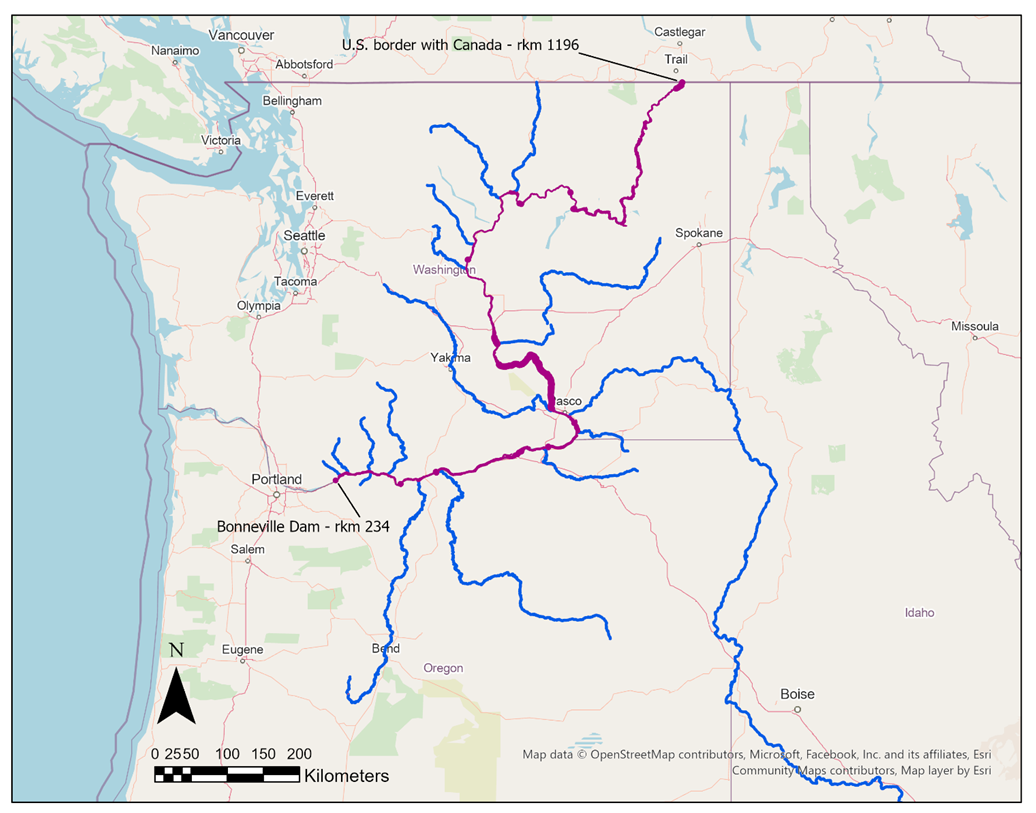
In 2022, Yakama Nation secured additional EPA CRBRP and Pacific Coast Salmon Recovery Fund (PCSRF) grant funding for a Phase 2 Pilot Study in the Bonneville Pool, an approximately 50-mile stretch of the Columbia River (Bonneville Dam to The Dalles Dam). The Pilot Study sampled for key toxics in fish (resident fish and adult/juvenile salmon), sediment, as well as developed outreach materials, a QAPP, and a Summary Report. In addition, a Draft Implementation Plan was developed for the long-term Columbia River Basin-Wide Toxics Monitoring Program, which includes the Mainstem Monitoring Program.
The Yakama Nation’s next step is to work towards Phase 3 – full implementation of the Mainstem Monitoring Program, which is currently not funded. In addition, we will work collaboratively to support Basin-Wide Monitoring Program efforts, including ongoing efforts to secure funding, identify a lead agency, and develop a program strategy and data management system.
Throughout this work, the Yakama Nation has partnered with the Columbia River Intertribal Fisheries Commission (CRITFC), Washington Department of Ecology (Ecology), Oregon Department of Environmental Quality (ODEQ), and U.S. Geological Survey (USGS) to complete this work. In addition, we have collaborated with numerous federal, state, tribal, local Government and Non-Governmental Organizations (NGO) entities.
Implementation of a Long-Term Monitoring Program to track the status and trends of toxics in fish, water, sediments, and invertebrates in the Columbia River mainstem from Bonneville Dam to the Canada border. This will be accomplished through a well-designed, respected, trusted monitoring program that delivers technically sound, unbiased data to support tribes, agencies, NGOs and citizen groups in their efforts to restore the Columbia River. Our goal is a clean, healthy Columbia River that supports natural resources, sustains cultural practices, and provides healthful foods.
More Projects of Columbia River Mainstem Monitoring Program:
https://www.epa.gov/columbiariver/columbia-river-basin-restoration-program-report
Related Announcements: